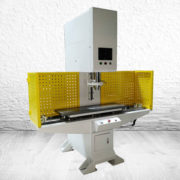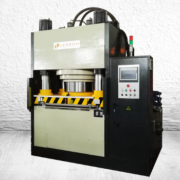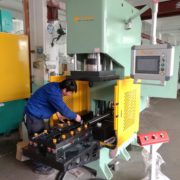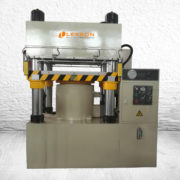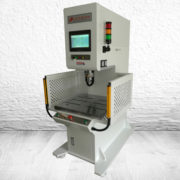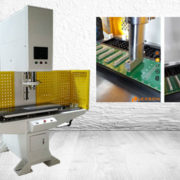
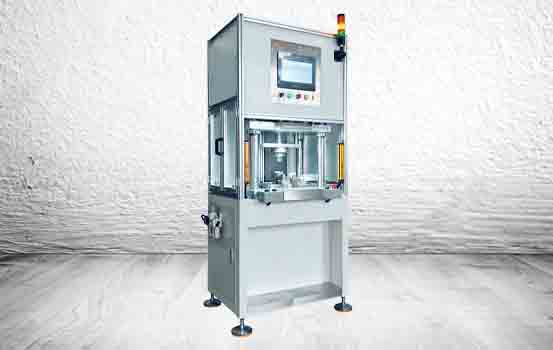
Lexson 2 ton Electric Servo Press for Press-fitting
Is the old hydraulic press in the workshop leaking oil again? Let’s talk about why the electric servo presses from LEXSON are becoming increasingly popular.
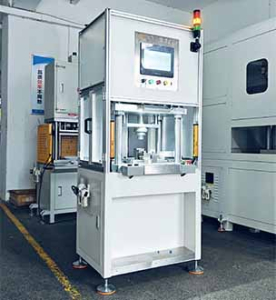
2-ton-electric-servo-press
The experienced workers who perform precise assembly in the workshop all have had this experience: The pneumatic press machine’s force fluctuates, causing the connectors to either not be pressed in properly or to burst the terminals; the hydraulic press machine has stable force, but it leaks oil, is noisy, and consumes a lot of electricity. It cannot even enter the dust-free workshop; it takes at least half an hour to adjust the mold for a different product.
This is the real background of the iterative development of the three generations of forging equipment – mechanical flywheel → hydraulic → servo press. By the servo generation, the core logic changed: instead of relying on clutches or oil pumps for “hard drive”, it was achieved by programmable servo motors + ball screws to convert rotation into linear force. It can stop, change speed, and adjust force during the process. In this subcategory, LEXSON’s P07 series is the one we have recently done more prototyping for.
What is the positioning of LEXSON P07?
LEXSON’s servo presses come in three types: C-frame, benchtop, and four-column. The tonnage ranges from 200 kgf to 8 tons (P07-0.2T to P07-8T), mainly targeting tasks such as the pressing and assembly of automotive components, precision electronic connectors, and bearing bushings, which require both force and displacement to be controlled.
Let me present these two pieces of data first to build trust:
Displacement accuracy: ±0.01 mm (0.0004 inches), pressure repeatability accuracy: ±1% of Full Scale.
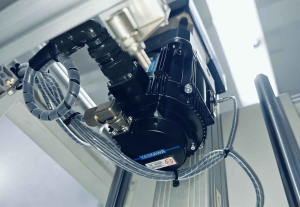
By using an electric servo motor, it consumes 75-80% less electricity than servo hydraulic machines of the same specification. It is fully electric-driven, oil-free, noise-free, and friendly for dust-free workshops.
electric-servo-press
Several key factors that truly affect the efficiency of the production line.
Dual closed-loop of force and position, not blind pressure
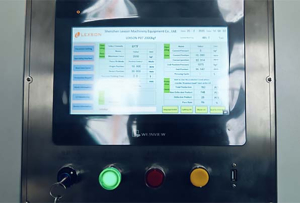
The press head is equipped with a pressure sensor and a displacement encoder. The F-D curve of the entire press-fitting process is displayed in real time on a 10” HMI. When the press reaches the end, it can automatically create a “qualified window”. If the window is exceeded, it is judged as NG – this is particularly crucial for positions such as backplane connectors and bearing press-fitting where “damaging one unit ruins the entire batch”.
Use three different pressing modes alternately
Constant speed + Stop at the destination
Constant speed + Stop when force is reached
Constant speed + insertion distance stop
For the same machine, changing the production process doesn’t require any hardware modifications; merely adjusting the recipe on the touchscreen will suffice.
10-inch color-screen HMI, over 100 recipe sets. The operator can directly change the products by copying them from USB. We can produce three types of reducer gear pressing on one line. Previously, it took 20 minutes to change the mold and adjust the hydraulic machine, while this machine can switch the recipes in just 30 seconds.
electric servo press
The data can be traced back.
Each press-fitting pressure-displacement curve can be saved or exported. When encountering a client’s factory inspection (the IATF 16949 system in the automotive industry), you can simply hand over the report directly. This is much more reliable than having an experienced worker write down the records by hand.
For whom is it suitable?
Based on the cases we have come across, the most suitable scenario for the P07 servo press is:
Car: Hub bearings, shock absorbers, stud mounting.
Electronics: Back panel connector, compliant-pin crimping.
General purpose: Sleeve/bearing insertion into castings, small parts precision assembly.
If your current workstation is still using pneumatic or old hydraulic systems, when you add up the costs of electricity for a single shift, oil leakage maintenance, and scrap rate, the all-electric servo system like P07 may not be “expensive”.
Sample-making suggestion: LEXSON offers non-standard modification based on tonnage / stroke/ table size. For the range of 200 kgf to 8 tons, it is more cost-effective to conduct a round of process verification with 2T or 5T first.